
Pressure Vessel
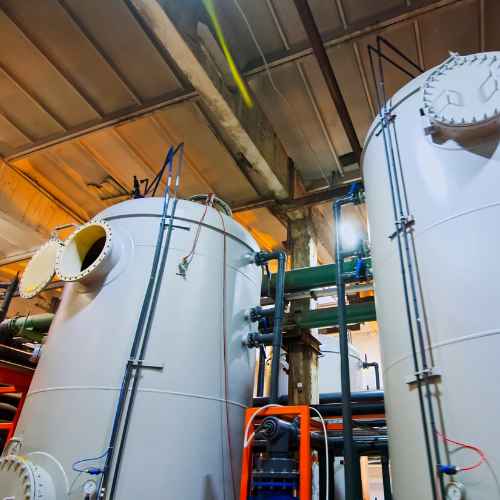
What Is a Pressure Vessel?
A pressure vessel is an engineered container designed to hold gases or liquids at a pressure that differs significantly from atmospheric pressure.
Therefore, its design requires careful consideration of internal pressure, temperature, material strength, corrosion, fatigue, fabrication methods, inspection, and safety.
These products are widely used across oil and gas, petrochemical, chemical processing, power generation, food processing, pharmaceuticals, water treatment, compressed gas, and other industrial sectors.
Because failure can create serious safety and operational risks, engineering calculations, material selection, welding procedures, inspection, testing, and documentation must be properly controlled.
Types of Pressure Vessel
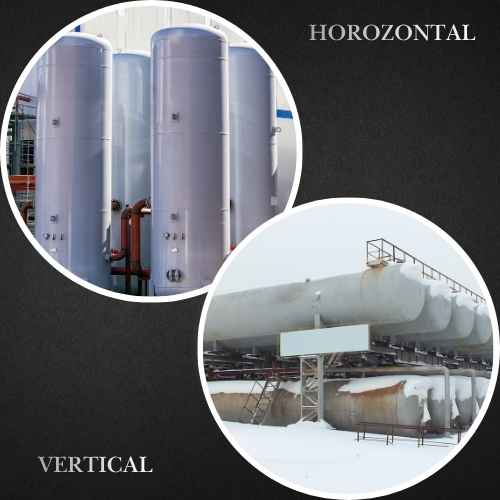
1. Horizontal Pressure Vessels
Horizontal units are commonly used when space, process layout, or material handling requirements favor a horizontal configuration.
Typical applications include:
- Oil and gas processing
- SeparatorsReceivers
- Storage systems
- Process equipment
- Gas treatment systems
2. Vertical Pressure Vessels
Vertical designs occupy less floor space and are often preferred in process plants where the available footprint is limited.
- Process separation
- Gas treatment
- Chemical processing
- StorageScrubbing
- Industrial process operations
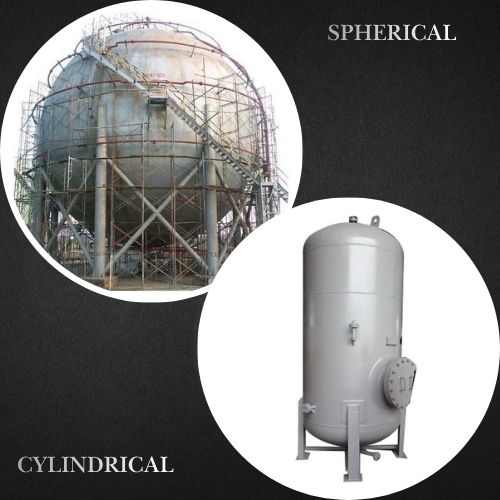
3. Spherical Pressure Vessels
Spherical vessels provide an efficient shape for containing high internal pressure because stress is distributed more uniformly across the shell.
They are often associated with large-volume storage of gases and liquefied products.
Typical applications include:
4. Cylindrical Pressure Vessels
Cylindrical construction is one of the most common configurations because it offers a practical balance between manufacturing complexity, structural performance, capacity, and cost.
Applications include compressed-air receivers, process equipment, chemical systems, and industrial storage.
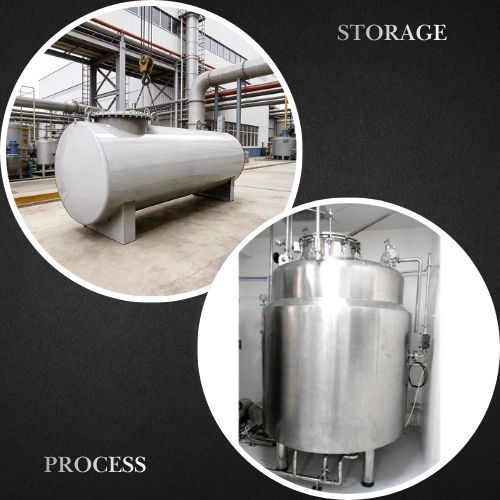
5. Storage Vessels
These units are designed for storing liquids or gases under controlled pressure. Their configuration depends on the product, operating pressure, temperature, volume, and site requirements.
Typical applications include:
6. Process Vessels
Process equipment performs a specific operation rather than simply storing a medium. Depending on the application, it may support separation, mixing, heating, cooling, reaction, filtration, or gas treatment.
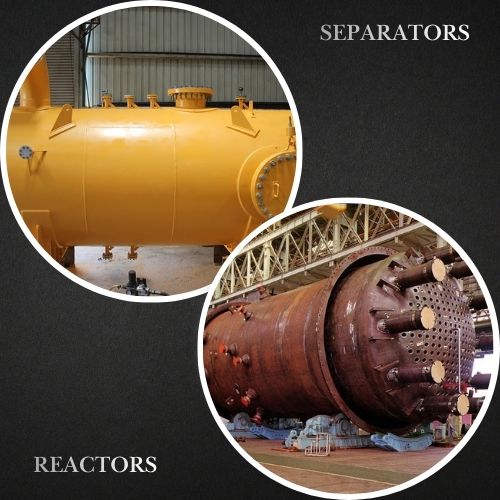
7. Separators
Separators are engineered to divide different phases, such as:
- Gas and liquid
- Oil and gas
- Oil and water
- Solid and liquid
They are especially important in upstream and downstream oil and gas operations.
8. Reactors
Reactors are designed for controlled chemical reactions. Consequently, their engineering may involve pressure, temperature, agitation, corrosion resistance, heat transfer, and specialized internal components.
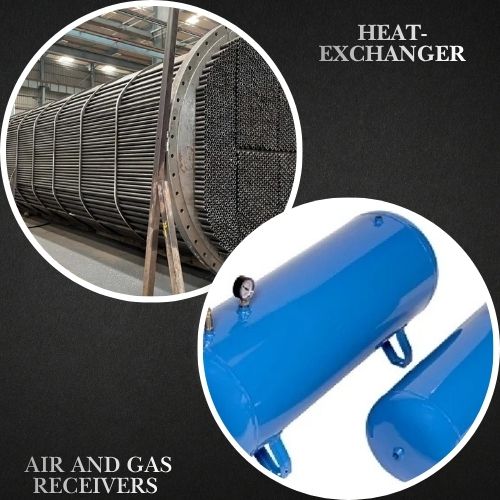
9. Heat-Exchanger Pressure Equipment
Certain heat-transfer systems operate under pressure and require careful mechanical and thermal engineering. Depending on the design, these units can support heating, cooling, condensation, or vaporization.
10. Air and Gas Receivers
Compressed air and gas receivers temporarily store pressurized media and help stabilize industrial systems. They are widely used in manufacturing plants, workshops, utilities, and process industries.
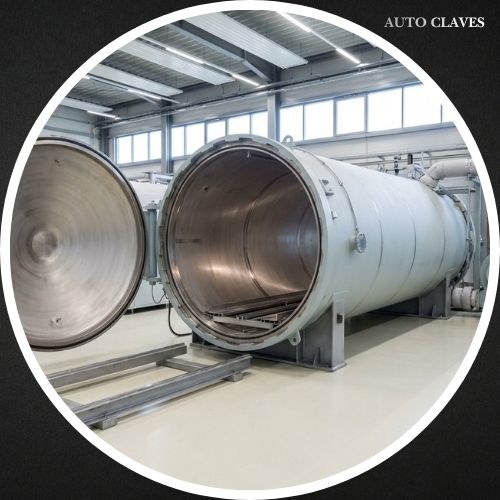
11. Autoclaves
Autoclaves are specialized pressure-rated chambers used where controlled pressure and temperature are required. They can be found in industrial processing, sterilization, composite manufacturing, and specialized production environments.
12. Customized Industrial Vessels
Some projects require non-standard dimensions, materials, nozzles, internals, operating conditions, or connection arrangements. In such cases, customized engineering becomes essential.
We support manufacturers in developing these specialized solutions according to project requirements and applicable design codes.
Our Pressure Vessel Design Consultancy
A successful product begins with a strong engineering foundation. Therefore, we support manufacturers during the complete design-development process.
Our design support can include:
- Product concept development
- Design calculations
- Material selection
- Thickness determination
- Pressure and temperature evaluation
- Nozzle and opening considerations
- Flange and connection selection
- Head and shell configuration
- Internal component design
- Drawing development
- Manufacturing drawings
- Bill of materials
- Design review
- Technical documentation
- Inspection requirements
- Testing requirements
- Design modification support
Furthermore, we can help convert customer requirements into a practical manufacturing package.
Design Codes and Engineering Standards for Pressure Vessel
The applicable code depends on the product, application, location, customer specification, and regulatory requirements. Commonly referenced standards and codes may include:
- ASME Boiler and Pressure Vessel Code
- ASME Section VIII
- ASME Section IX
- API standards where applicable
- ASTM material standards
- EN standards
- ISO standards
- PED requirements for applicable European-market projects
- Customer-specific engineering specifications
However, the correct standard must always be selected according to the actual design and intended service. A consultant should therefore review the project requirements before confirming the applicable code.
Material Selection for Pressure Vessel
Material selection directly affects mechanical strength, corrosion resistance, fabrication, service life, and overall project cost.
Depending on operating conditions, manufacturers may work with:
- Carbon steel
- Low-alloy steel
- Stainless steel
- Duplex stainless steel
- High-alloy materials
- Specialized corrosion-resistant materials
Selection should consider pressure, temperature, fluid characteristics, corrosion allowance, welding requirements, impact toughness, and applicable code requirements.
Fabrication Support for Pressure Vessel
Good engineering must translate into reliable manufacturing. For this reason, we help manufacturers strengthen the connection between design and production.
Our support can cover:
- Fabrication planning
- Plate and material specifications
- Welding documentation
- Welding procedure development
- Welder qualification requirements
- Heat-treatment considerations
- Dimensional control
- Inspection planning
- NDT requirements
- Hydrostatic testing
- Pneumatic testing where permitted
- Surface treatment
- Painting and coating specifications
- Nameplate and marking requirements
- Packing and dispatch documentation
As a result, manufacturers can create a more controlled and repeatable production process.
Quality Assurance and Inspection Support for Pressure Vessel
Industrial customers expect consistent quality and traceable documentation. Therefore, we help companies develop suitable quality-control systems for their products and projects.
Depending on the contract, inspection activities may include:
- Material identification
- Material certificates
- Dimensional inspection
- Visual inspection
- Welding inspection
- Radiographic testing
- Ultrasonic testing
- Magnetic particle testing
- Dye penetrant testing
- Hardness testing
- Pressure testing
- Final inspection
- Documentation review
The actual inspection plan should be established according to the applicable code, purchase specification, service conditions, and customer requirements.
Business Development Solutions for Pressure Vessel Manufacturers
Engineering capability alone does not guarantee business growth. Manufacturers also need a clear market strategy.
Therefore, we help companies develop a commercial roadmap covering:
- Market identification
- Product positioning
- Competitor analysis
- Customer identification
- Export market development
- Distributor development
- B2B lead generation
- Technical sales support
- Quotation strategy
- Product presentation
- Website development
- SEO strategy
- Digital marketing
- Customer communication
- CRM development
- Sales pipeline management
In addition, we help translate technical capabilities into a professional commercial message that international buyers can understand.
Global Market Development for Pressure Vessel
Entering international markets requires more than finding buyers. Buyers evaluate manufacturing capability, technical documentation, quality systems, delivery performance, pricing, certifications, and communication.
Our approach therefore combines technical consulting with business development.
We can help manufacturers present:
- Manufacturing capabilities
- Product specifications
- Design capabilities
- Inspection facilities
- Testing capabilities
- Quality systems
- Production capacity
- Export capabilities
- Technical documentation
- Product catalogs
- Company profiles
This creates a stronger foundation for international customer acquisition.
From Product Concept to Global Customer
Our consulting model connects the complete business cycle:
Market Research → Product Concept → Engineering → Design → Manufacturing Support → Quality → Documentation → Marketing → Lead Generation → Quotation → Customer Development → Export Support
Consequently, manufacturers do not need to manage every stage independently.
Who Can Work With Us?
Our services are suitable for:
- Pressure equipment manufacturers
- Fabrication companies
- Engineering companies
- EPC contractors
- Oil and gas equipment suppliers
- Chemical equipment manufacturers
- Process equipment manufacturers
- Industrial equipment startups
- Existing manufacturers entering new product categories
- Companies targeting international markets
Whether you are an established manufacturer or developing a new industrial product line, we can structure the technical and commercial requirements around your business objectives.
Why Choose Us?
Engineering + Business Development
Many consultants focus only on engineering or only on sales. We combine both areas to create a practical growth strategy.
Product-Focused Approach
We help businesses understand what customers require, how products should be developed, and how they can be positioned in competitive markets.
Manufacturing Understanding
Our approach considers real manufacturing conditions, documentation, inspection, costing, delivery, and customer expectations.
Export-Oriented Strategy
We help manufacturers prepare their technical and commercial presentation for international buyers.
End-to-End Support
From design development and documentation to marketing and customer acquisition, our support can cover multiple stages of the business cycle.
Frequently Asked Questions
What does a pressure vessel consultant do?
A consultant can support design development, engineering coordination, manufacturing planning, inspection requirements, documentation, quality systems, and commercial development, depending on the project scope.
Which industries use these products?
They are used extensively in oil and gas, petrochemical, chemical processing, power generation, pharmaceuticals, food processing, water treatment, compressed gases, and general industrial applications.
Can you help a manufacturer develop a new product?
Yes. We can support the transition from customer requirements and product concepts to engineering documentation, manufacturing planning, quality requirements, and market positioning.
Can you support export business development?
Yes. Our business development support can include market research, product positioning, website and SEO strategy, lead generation, customer communication, quotation support, and export-market development.
Do all projects use the same design code?
No. The applicable code depends on the equipment, operating conditions, jurisdiction, customer specification, and intended application. The design basis should be established before engineering begins.
Can you support customized designs?
Yes. Customized industrial equipment often requires project-specific dimensions, materials, connections, internals, operating conditions, and documentation. We can support the design-development and business coordination process according to the project scope.
Conclusion
A successful pressure equipment business requires a combination of engineering expertise, manufacturing capability, quality control, documentation, market knowledge, and customer development.
As a Business Development and Design Consultant, we help manufacturers bridge the gap between technical capability and commercial growth. Furthermore, our approach connects product development with market strategy, allowing companies to build stronger products and pursue new domestic and international opportunities.
If you are planning to manufacture, redesign, expand, or export industrial pressure equipment, we can help you create a structured roadmap from design and engineering to manufacturing, quality, marketing, and global business development.
Get in Touch
Looking for a pressure vessel design consultant or business development partner?
Contact us to discuss your product, manufacturing capability, target market, engineering requirements, or export plans.
Build Better Products. Reach Better Markets. Grow Globally.